Diving Cozumel: Reefs, Drift Dives, and the Cenotes of Tulum
Scott Neal Sep 27, 2026
Cozumel is famous for its reefs. But the dive most people talk about for years afterward happens on the mainland, inside the jungle, in water so clear it looks like air.
That's cenote diving. Here's what it is, what to expect, and how to do it with us this October.
First, the reefs
Cozumel sits on the Mesoamerican Barrier Reef, also called the Great Mayan Reef. It stretches more than 1,100 kilometers across four countries.
The island is known for drift diving. Instead of kicking against the current, you let it carry you gently along the wall while the reef slides by. It's relaxed, it's easy on your air, and it's a lot of fun.
So what's a cenote?
A cenote (say it "seh-NO-tay") is a sinkhole filled with fresh water. Over a very long time, water wore away the limestone under Mexico's Yucatán Peninsula and carved out huge underground rooms. When a roof collapses, you get an opening you can dive into.
Inside, you'll see stalactites, rock formations, and beams of sunlight cutting through the water. It feels like floating through a cathedral.
Cavern diving, not cave diving
This is the part that makes people nervous, so let's clear it up.
Recreational cenote dives are cavern dives. You stay in the daylight zone, where you can always see natural light and a way out. Guided cavern dives generally keep you within about 60 meters (200 feet) of the surface, following a permanent guideline.
Cave diving goes past the light into total darkness. That takes special training and gear, and it's not what we're doing.
The cenotes on our trip
The Pit. This one goes deep. Around 100 feet (30 meters), a layer of hydrogen sulfide forms a ghostly white cloud that looks like fog underwater. Add huge chambers, stalactites, and sunbeams from the jungle above, and it's unforgettable.
Dos Ojos. The name means "Two Eyes," after its two connected openings. You'll follow either the Barbie Line or the Bat Cave route, both with crystal-clear water and amazing formations. It's shallow, averaging under 30 feet (10 meters), which makes it very approachable.
What you'll notice down there
The halocline. In some cenotes, fresh water sits on top of salt water. Where they meet, the water turns wavy and blurry, like looking through heat off a road. It's one of the strangest things you'll ever see underwater.
Fresh water. Cenotes are fresh water, not salt. You'll feel a little less floaty than in the ocean, so your buoyancy will need a small adjustment.
Warm, steady temperatures. Cenote water stays in the mid-70s °F all year.
Tips for your first cenote dive
- Work on your buoyancy before you go. Good control keeps you off the formations and away from the silt.
- Learn the frog kick. It pushes water back instead of down, so you don't stir up the bottom and cloud the water for everyone behind you.
- Stay with your guide and the line. Your guide knows the route. Follow them.
- Bring a light. Even in the daylight zone, a dive light helps you see detail in the shadows.
Join us: Cozumel Reef and Cenote Dive Adventure
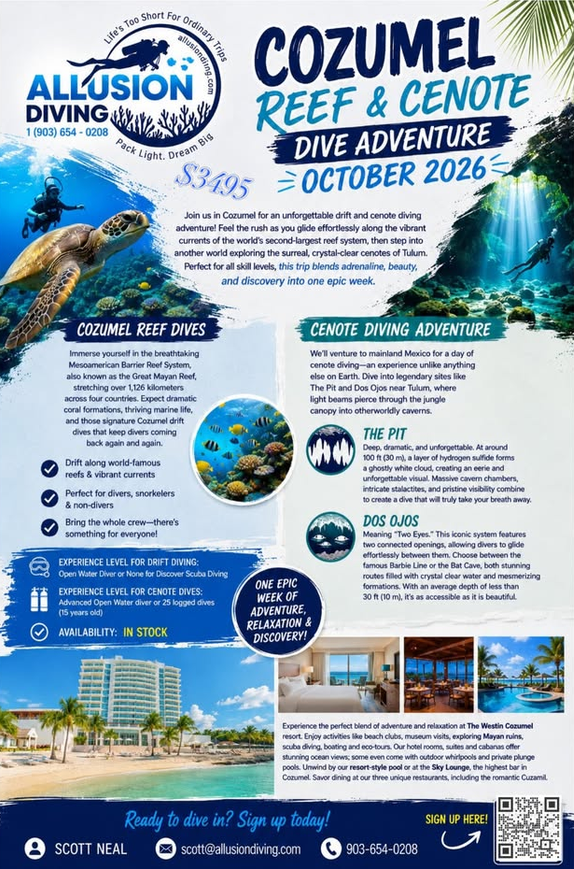 October 20 to 27, 2026. We'll stay at the all-inclusive Westin Cozumel, with water-view rooms and meals and drinks included.
- Up to 16 dives, with boat pickups right from the hotel pier
- Optional twilight and night dives
- A full cenote day at The Pit and Dos Ojos, with local guides from Blue Life
- A laid-back island day with a stop at Mayan ruins
- $3,495 per person, double occupancy
Who can go? Open Water divers can join the drift dives. Not certified yet? Try a Discover Scuba Diving experience. For the cenote dives, you'll need Advanced Open Water or 25 logged dives.
Non-divers are welcome too. There's plenty to do on the island.
Not quite at the cenote level yet? That's what private lessons are for. We can help you get your Advanced Open Water or polish your buoyancy before the trip.
See the full trip details or email Scott@AllusionDiving.com.